I realise today, the point I was trying to make yesterday wasn’t entirely complete - and other joys of evolving in your own mind
A reflection on scrutiny, bias, and who we hold accountable. Unpacking how privilege shapes the way we question authenticity.
Nahl Ghani
3/31/20265 min read
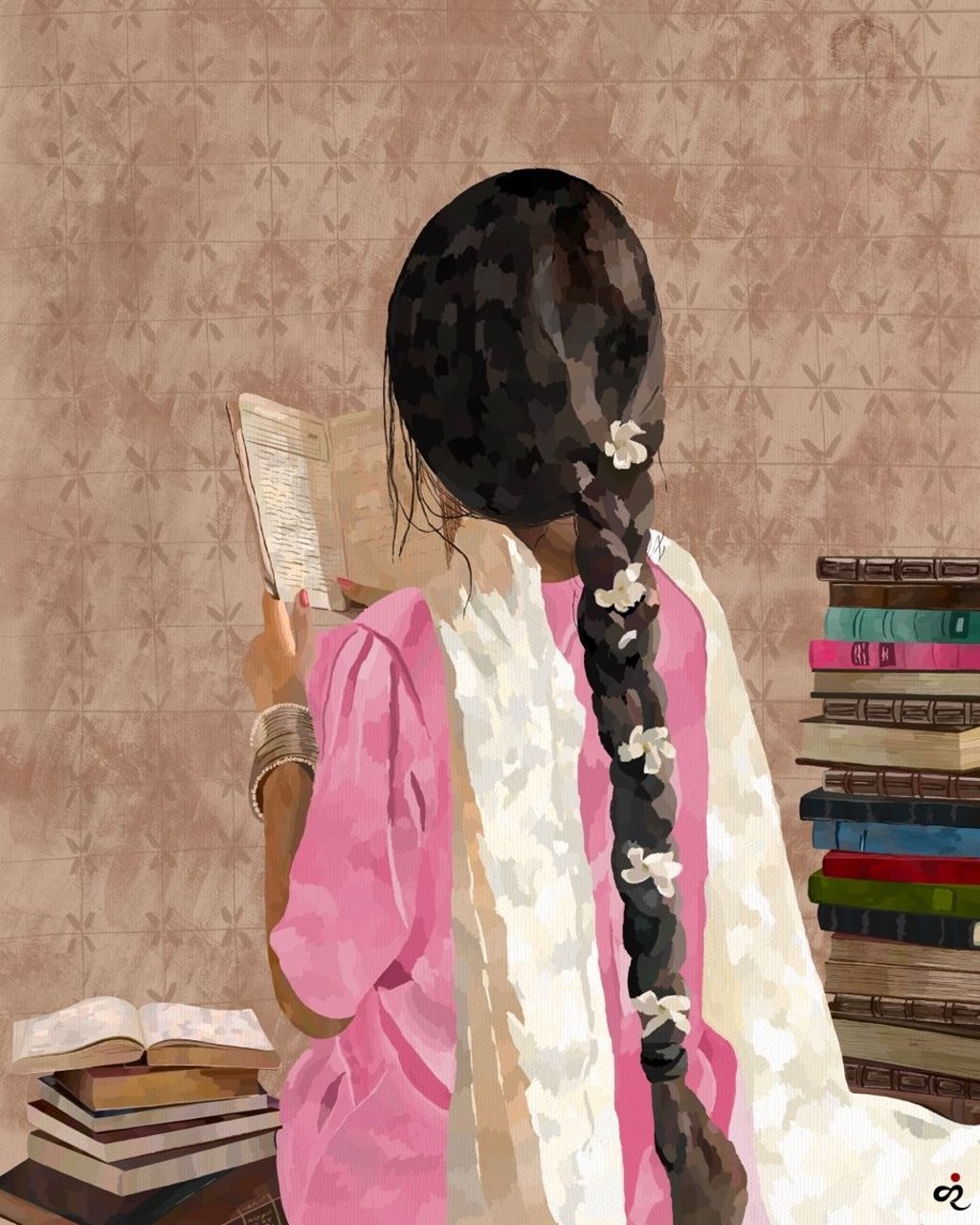
Illustration: Kirti Rathi, India | @kirti.rathi.art
There is a very particular kind of discomfort that comes from realising that something you were certain about wasn’t accounting for everything it needed to.
The kind where a thought sits well in your body. It makes sense. You can defend it, articulate it, even feel slightly confident in it. And then, without anyone correcting you, you begin to see what it hadn’t considered. I think that discomfort is worth documenting.


This reflection began, unexpectedly, with a controversy.
Over the past few days, I found myself thinking about the discourse surrounding the Instagram creator Pujarini Pradhan, @lifeofpujaa. Her presence online is, in many ways, disarmingly simple - videos filmed in cramped corners of her home, a life that visibly reflects a rural or semi-rural upbringing, and yet, a voice that is articulate, thoughtful, and deeply anchored in literature. She holds an undergraduate degree in English Literature, speaks fluently, and carries a strong Bengali/Odishi accent that she does not dilute for palatability.
There is something profoundly grounding about her content - a love for books and films, a subtle but consistent emphasis on women’s empowerment, and a perspective that feels, if not entirely untouched, at least not overly curated in the way we have come to expect from digital spaces.
And yet, as her visibility has grown, so has the scrutiny.
With brand collaborations from companies like Audible, and a noticeable shift in her lifestyle, questions began to surface. Influencers pointed to details that, to them, suggested something more calculated beneath the surface - most notably, the fact that she had previously published a book on Amazon before her rise to social media prominence.
From there, a familiar accusation emerged - industry plant.
Now, to be clear, scrutiny in itself is not inherently wrong. No public figure, regardless of background, should be beyond question. The relationship between influencers and corporations is complex, often opaque, and absolutely worth examining. Transparency matters. Authenticity matters. The commodification of relatability is real.
What I found myself doing wasn’t reconsidering my position on her. I remained instinctively in support of her work, but began interrogating the idea of scrutiny itself, because while scrutiny felt necessary, something about how it was being applied here didn’t sit right.


What began to stand out was how the same markers were being interpreted differently depending on who they belonged to. A pre-existing book, for instance, might signal initiative or credibility for a privileged, urban creator. For someone like her, it becomes evidence of premeditation - of being “placed” or “selected”. A rapid rise becomes suspiciously convenient, and brand collaborations become proof of co-option rather than success.
This is where the question shifts - from whether the critique is valid to what is shaping the lens through which it is being made.
I do not think it is entirely accurate to label the discourse as overtly casteist or classist. There are valid concerns being raised, and there is room to question how authenticity operates within influencer economies.
But bias does not always appear in intention. It often reveals itself in pattern - in the subtle disbelief that someone from a marginalised background could navigate systems of visibility, publishing, and branding with agency, in the assumption that upward mobility, when it happens efficiently, must have been engineered, and in the discomfort of seeing intellectual authority exist outside traditionally sanctioned spaces.
It is not always said explicitly, but it lingers underneath -
"How did she get here, and could she have gotten here this way?"
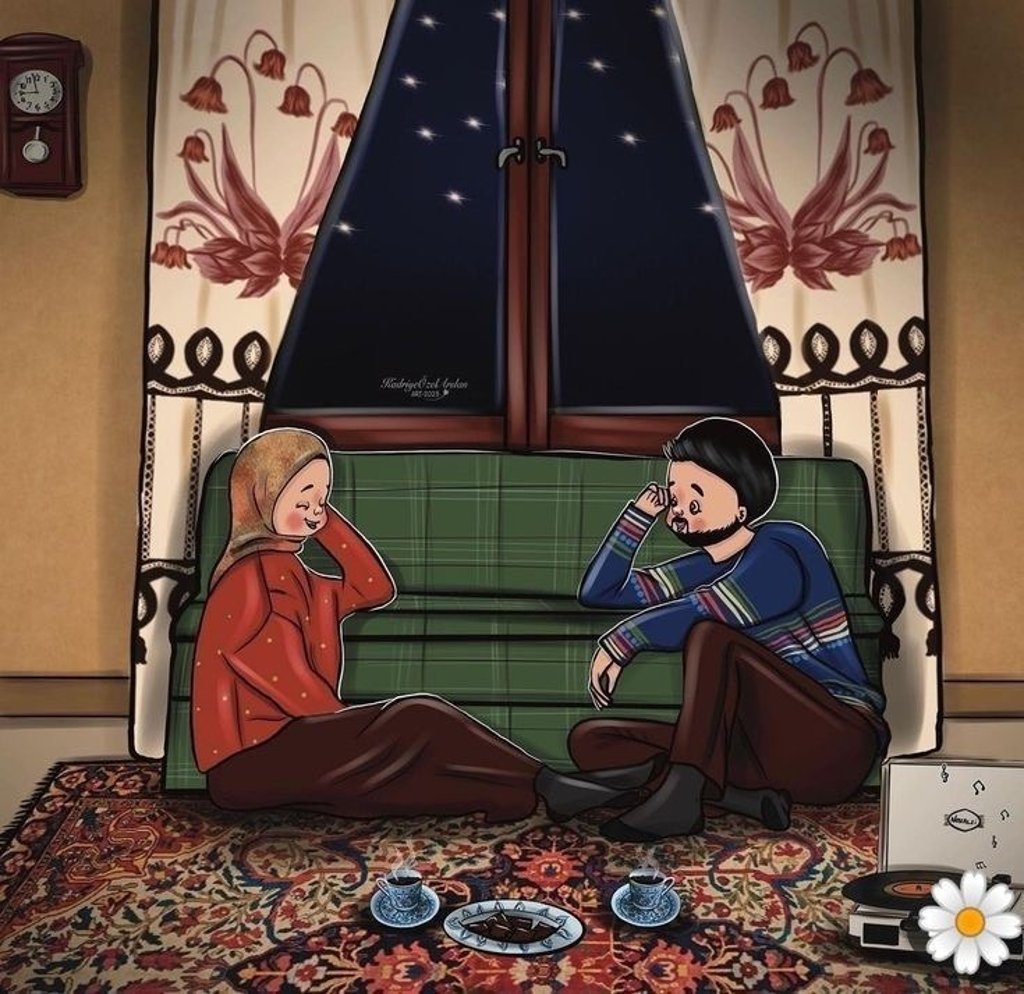
Interestingly, this reflection did not emerge in isolation. It unfolded through a conversation I had with my husband just yesterday.
We were speaking about social media in the context of religious discourse within Islam - we are both Muslims - and what became clear quite quickly was a shared tension. When complex ideas are reduced into fragments, they can lose the context that gives them meaning. In spaces like faith, that loss of nuance can have consequences that are not just intellectual, but deeply personal, communal, and sometimes, dangerous.
At the same time, access itself is not the problem. For many who have never had proximity to formal scholarship, access, however imperfect, still allows engagement, questioning, and seeking.
So the issue is not who gets access to knowledge. It is how that knowledge is held and shared, and more importantly, that the responsibility to carry nuance does not sit evenly across everyone.
Not all participants in any discourse carry the same weight of consequence. The cost of error, misinformation, or systemic failure is rarely distributed evenly.
Take climate change, for instance. It is not the most privileged populations who bear its immediate and harshest consequences. It is those in lower-income communities, in geographically vulnerable regions, and in parts of the world that are already structurally disadvantaged. They are the first to be displaced, the first to face scarcity, and the first to experience the cascading effects of a crisis they did not create.
The same unevenness exists in discourse.
Which is why I find myself increasingly believing that while access should be expanded for all, the onus of nuance - of responsibility, of critical engagement - rests heavier on those who are more privileged, educated, and resourced.
When responsibility is uneven, scrutiny rarely remains neutral. It begins to reflect those same imbalances.


Which brings me back to the discourse around lifeofpujaa.
What initially appeared to be a conversation about authenticity is also revealing something else - the presence of gatekeeping, the persistence of elitism, and, at moments, the contradictions within certain strands of performative feminism.
There is a very specific image of what a “modern, strong, independent woman” is supposed to look like. She is articulate in a certain accent, empowered in ways that align with urban aesthetics, and progressive in ways that are already legible to privileged spaces.
When a woman does not fit that mould - when she speaks with a regional accent, dresses in a saree or a hijab, or exists within a visibly non-elite environment - her legitimacy is more readily questioned or diminished.
So when someone like her occupies space - intellectually, culturally, digitally - it unsettles more than just ideas of authenticity.
It unsettles hierarchy.
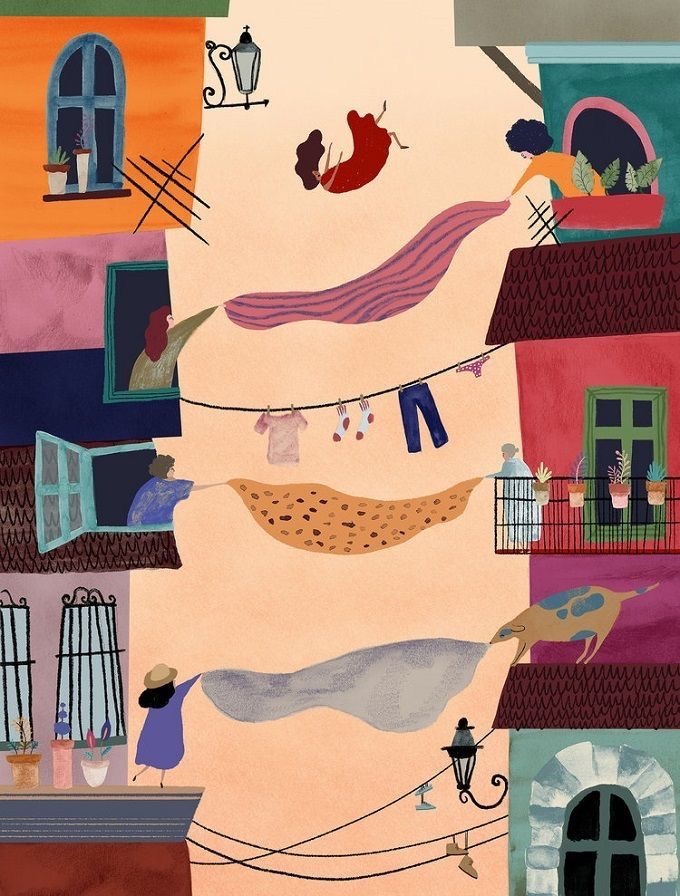
Illustration by Beatriz Gutierrez Muller
So today, I can see that what felt like a complete position wasn’t accounting for everything it needed to.
Because the question was never just whether the critique was valid. It was also about how that critique is structured - what it assumes, how it is applied, and who it demands more from.
Perhaps that is the more honest way of understanding change. Not as abandoning what you believe, but as holding it to a higher standard, allowing it to stretch far enough to include what it initially overlooked. Because sometimes, growth doesn’t come from thinking differently. It comes from asking more of what you already believe.